Linden Leaf Gall Mite

linden_leaf_gall_mite_02

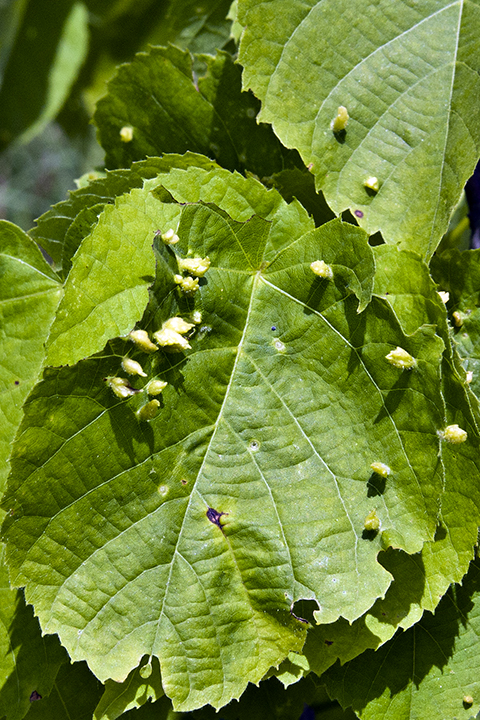
In Minnesota, linden leaf gall mite (Eriophyes tiliae), a specialized plant feeder is found only on American basswood and littleleaf linden, usually the lower leaves. In other parts of the country it is also found on lime trees. As it feeds on the leaf it causes the host plant to create finger-like galls on the upper leaf surface. The galls are unsightly but the infestation causes no harm to the host tree.

This is a common species yet little is known of its life cycle. The adult spends the winter in a crevice in the bark or near a bud. The first galls appear in June.

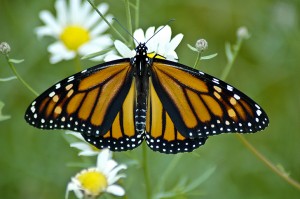
Monarch Population Crash Continues in 2014

monarch

Photo by Tom Baker

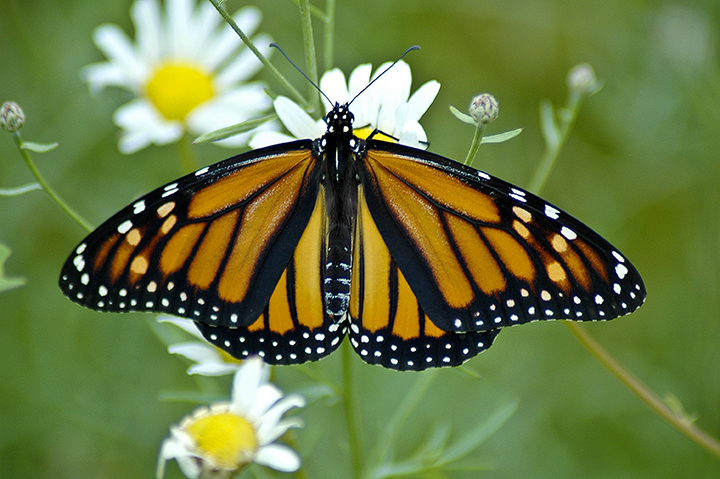
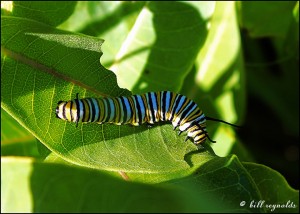
This year, 2014, is going to be another bad year for the monarch (Danaus plexippus).

The population of monarchs has declined precipitously in the last two years. It began in 2012 with an unusually warm March, followed by a normally cool April, then an extremely hot and dry summer. That winter saw only 60 million monarchs visiting their overwintering sites in the forests of Mexico. That was down from 350 million the previous winter.
monarch

Photo by Bill Reynolds

Other factors contributing to the population decline include deforestation of the oyamel fir forests in Mexico, loss of habitat in the United States, and the effects of the unusually cold spring on the milkweeds in Texas.

In December 2013, the WWF-Telcel Alliance and Mexico’s National Commission for Protected Areas conducted a survey of Mexico’s Monarch Butterfly Biosphere Reserve. Hibernating butterflies occupied only 1.65 acres of the reserve. That was a 44% drop from 2012, when 2.76 acres were covered.

My own observation is that for most of the last decade the monarch has been ubiquitous throughout the state. There was hardly a site I visited where I did not see at least one. Seeing a monarch was as common an occurrence as seeing a common dandelion or hearing a Black-capped Chickadee – they were everywhere. In 2013 monarch sightings were, if not uncommon, at least much less frequent than in recent years. 2014 promises even fewer sightings.

Another migratory butterfly, the red admiral, was uncommon in 2013 after being very common in 2012.
Yellow archangel

yellow archangel

Photo by Bill Reynolds

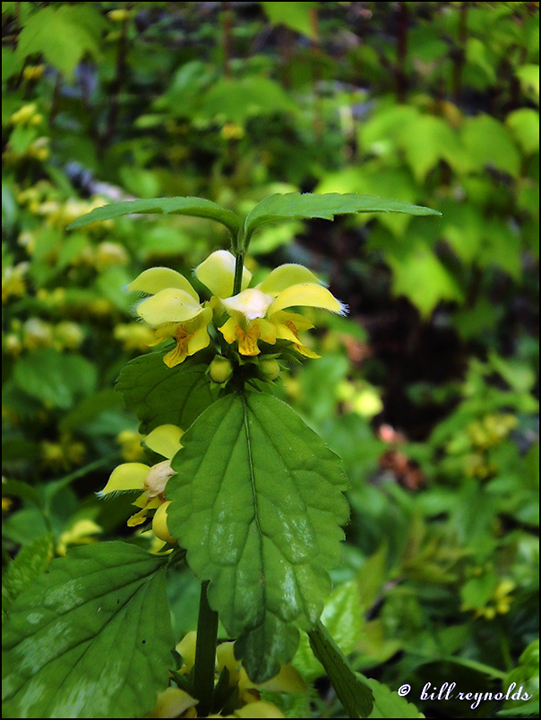
The showy false whorls of yellow flowers and variegated leaves make yellow archangel (Lamiastrum galeobdolon) easy to identify. It is native to Europe and western Asia, where it is cultivated as an ornamental. It was imported into North America as a garden plant and has escaped cultivation. It has become naturalized in California and the northeast United States, where it is considered an invasive species. It is uncommon in Minnesota where, to date, it has been recorded only in St. Louis County.

http://www.minnesotaseasons.com/Plants/yellow_archangel.html

EDDMapS Location Data Added

MinnesotaSeasons.com distribution maps for plants  have been updated to include location data from Early Detection and Distribution Mapping System (EDDMapS).

EDDSMapS“EDDMapS is a web-based mapping system for documenting invasive species distribution… EDDMapS combines data from other databases and organizations as well as volunteer observations to create a national network of invasive species distribution data.”
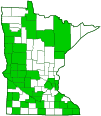
EDDMapS lists 394 species in Minnesota. Not all the listed plants are a problem in Minnesota, but all of them are exotic to the U.S. and are listed as a problem somewhere in the U.S. Distribution maps for listed plants that appear on MinnesotaSeasons,com now include EDDSMapS observations.

Russian olive

Russian olive

Polyphemus Moth

Photo by Bill Reynolds

Photo by Bill Reynolds

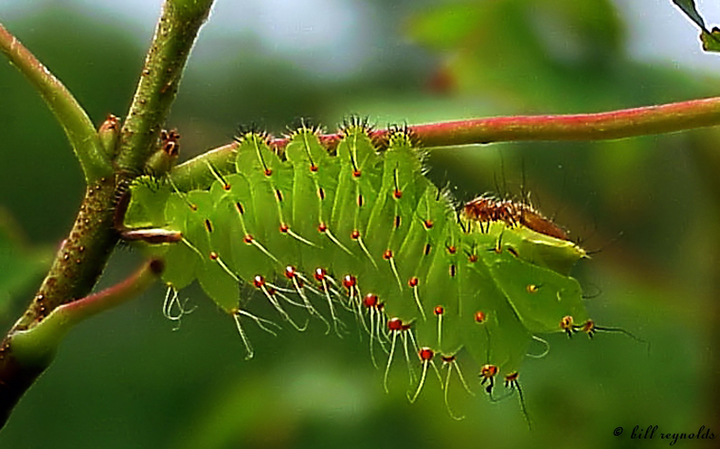
Polyphemus moth (Antheraea polyphemus) is a common, extra large, giant silkworm moth. With a wingspan of 4″ to 6″ it is one of the two largest moths native to North America. The caterpillar either descends to the ground and spins a cocoon in leaf litter or spins a cocoon in a rolled leaf of the host plant which falls to the ground at the end of the season. The adult is short-lived, lasting only 4 days.

Polyphemus moth (Antheraea polyphemus)

Northern Tooth

Photo by Bill Reynolds

Photo by Bill Reynolds

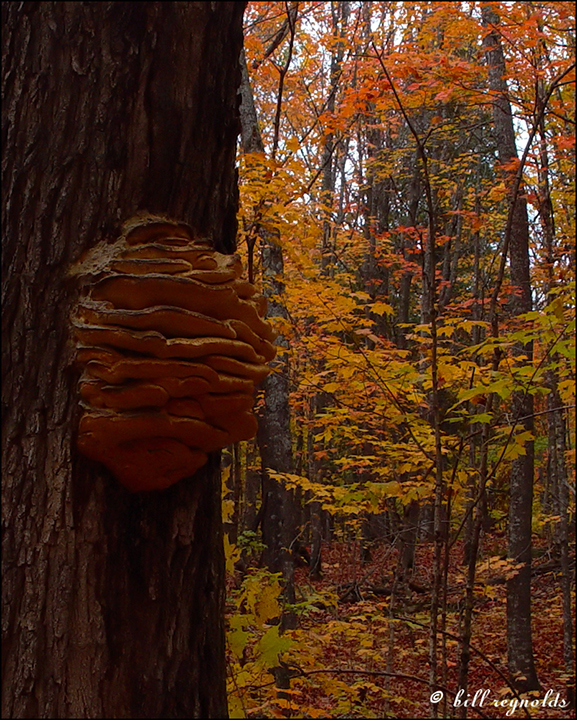
Northern Tooth (Climacodon septentrionalis) is a widespread and fairly common tooth fungus. The fruiting body is annual and often massive, up to 20″ tall and 10″ wide. It consists of tight, overlapping layers of shelf-like caps joined at the base by a whitish plate. It lives high on the trunks if living hardwood trees, especially sugar maple. It enters the tree through a wound and causes heartwood rot. It is sometimes found on recently dead trees and stumps but is rarely found on fallen logs.

Northern Tooth is not poisonous but is not edible due to a bitter taste and a tough texture. It has a sour smell when it is fresh, an unpleasant, rancid odor as it dries.

Northern Tooth (Climacodon septentrionalis)

Whitespotted Sawyer

Photo by Bill Reynolds

Photo by Bill Reynolds

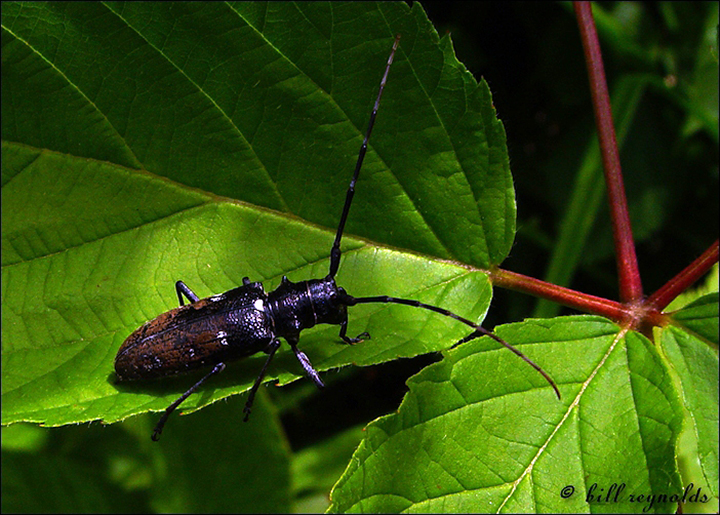
The whitespotted sawyer (Monochamus scutellatus scutellatus) is a common, widespread, long-horned beetle often found in fire-damaged coniferous and mixed forests. It is most easily identified by a small white spot between the bases of its wings. The larva of this beetle spends two years boring through pine, spruce, fir, or tamarack before emerging as an adult. While the damage it causes is not sufficient to kill the tree, the bore hole it makes allows various fungi, which can be fatal, to enter the tree.

Whitespotted Sawyer Profile

Western Jacob’s Ladder

Photo by Bill Reynolds

Photo by Bill Reynolds

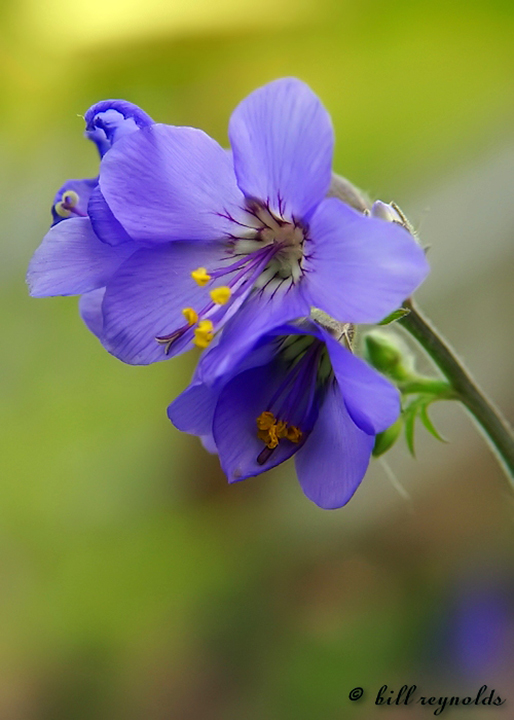
There are only five known locations where western Jacob’s ladder (Polemonium occidentale ssp. lacustre) can be found today. Three of those locations are in Minnesota and two are in Wisconsin. The species is restricted to openings in conifer swamps that have a blanket of sphagnum and other mosses and are dominated by northern white cedar and sometimes tamarack and/or black spruce. It rises on a single erect stem. The leaves have up to 27 narrow leaflets that resemble a ladder. The blue flowers can be seen from late June to July.

Leafcutting bee

The leafcutting bee (Megachile latimanus) is a common and widespread solitary bee found between May and October in dry areas of savannas, grasslands, and agricultural fields. It has a stout, entirely black body densely covered with mostly pale yellow and black hairs. Unlike most bees the pollen-collecting hairs on leafcutting bees are on the underside of the abdomen, not on the legs.

Photo by Bill Reynolds

Photo by Bill Reynolds

This bee gets its common name from the nest-building female. She uses her enlarged, scissor-like mandibles to cut disks from leaves and uses the disks to create individual nests for her eggs.

Plant Distribution Maps Updated

In May 2013 the Minnesota DNR updated MNTaxa: The State of Minnesota Vascular Plant Checklist. It is now available on the DNR Website. It contains a statewide distribution by county map for each species listed. For the past four weeks I have been updating all plant distribution maps to include the MNTaxa data as well as data from the Bell Museum of Natural History Herbarium, Flora of Minnesota, Specimen Database.

Bell_Museum_Logo

The project was completed today. All 786 plant distribution maps have been updated.

Range_snow_trilliumSnow Trillium